Eight years on the Moon
Andrew Chaikin on eight years writing A Man on the Moon, a phone call from Tom Hanks, and the series that followed.
It has been almost 63 years since President John F. Kennedy announced that the United States would be “landing a man on the moon and returning him safely to the earth.” Since that day, countless books have been released on the events that transpired. One of those that stands out amongst the many is Andrew Chaikin’s A Man On The Moon: The Voyages of the Apollo Astronauts. This book captures the history of the Apollo Program from start to finish, interviewing countless people who worked on the missions, including 23 of the 24 astronauts themselves. Chaikin’s work not only highlights all the individual missions but goes into intricate detail regarding what is happening behind the scenes and why. The complex workings of NASA and the Apollo missions are laid out but done in a simplified way so anyone can pick it up and understand. The Apollo programs and space exploration, in general, are very popular topics for readers. Still, diving in for someone who lacks previous knowledge and understanding of that area can also be incredibly intimidating. A Man On The Moon: The Voyages of the Apollo Astronauts can be read by anyone from any background who wants to know how one of our own got to the Moon.
Chaikin grew up like so many kids of the sixties and seventies did with the intention of exploring space and the Moon as an astronaut. Many of those people obviously drifted away from those dreams but Chaikin did not. He went to Brown University where he became trained as a planetary geologist, “my plan was to study geology, I will go to grad school for planetary, and then after that down the road I will apply for the astronaut program,” he told me. While in college he worked on the Viking mission at the Jet Propulsion Laboratory in Pasadena. “That was an amazing experience but also made me doubt that I wanted to be a practicing scientist,” Chaikin remembered.
After graduating he took a trip abroad and was unsure about his future work but was certain that he wanted to live in Boston and do anything that related to space. Chaikin then went to work for Sky and Telescope magazine, which is a publication for astronomers and fans of astronomy that Chaikin himself was a subscriber of since 1971. While there, he worked on projects of individual books and articles and it was work that gave him the experience he enjoyed, “I had found my niche because I could use my science background but it was really a creative process writing.” Chaikin told me. “I never planned on being a writer.”
The job at Sky and Telescope had Chaikin covering voyager missions, shuttle flights, and other various space related events, “I rode [the KC-135], the plane they call the vomit comet where you do zero g’s for a story on space motion sickness, as it had become a concern for the early shuttle flights.”
After working at the magazine for about four years, Chaikin wanted to branch out into writing a book and set his sights on a place with extreme conditions, not space, but the Antarctic. “I tried to get onto one of the teams going to the Antarctic looking for meteorites,” said Chaikin. After writing to one of the scientists attending the expedition, he was told that one of the scientists was already planning on writing a book. “That was a blessing in disguise because I don’t think I would have been very happy going to the Antarctic.”
These broken plans led to the idea that Chaikin had been obsessed with ever since he was a child, Apollo. He would go on to gather information about the missions and the astronauts’ experiences. “I was so captivated with the idea of telling that story better than anyone had done it, and really, there was no book that conveyed the astronaut’s experience that I wanted to read.” Even though the world would change for Chaikin and his life would be caught up in this 8 year project, he wasn’t intimidated, “I was looking forward to it…being cozy in my office working on this Magnus opus.”
Going through your first read of the book, by the first chapter it is evident how much work had gone into acquiring all the information and sources to put together this story. Writing a book today has become almost a different activity in some ways than it was before the internet. There was no contact number or email on the astronauts website that he could call and hear back from quickly. Chaikin wrote letters in many cases asking people to be interviewed. For example if he needed a piece of information regarding a detail about Gemini 1, he needed to find it in a past newspaper/magazine clipping or book on the subject, “I had a whole stash of New York Times articles I had been stashing since I was a kid and I actually used some of them,” Chaikin told me.
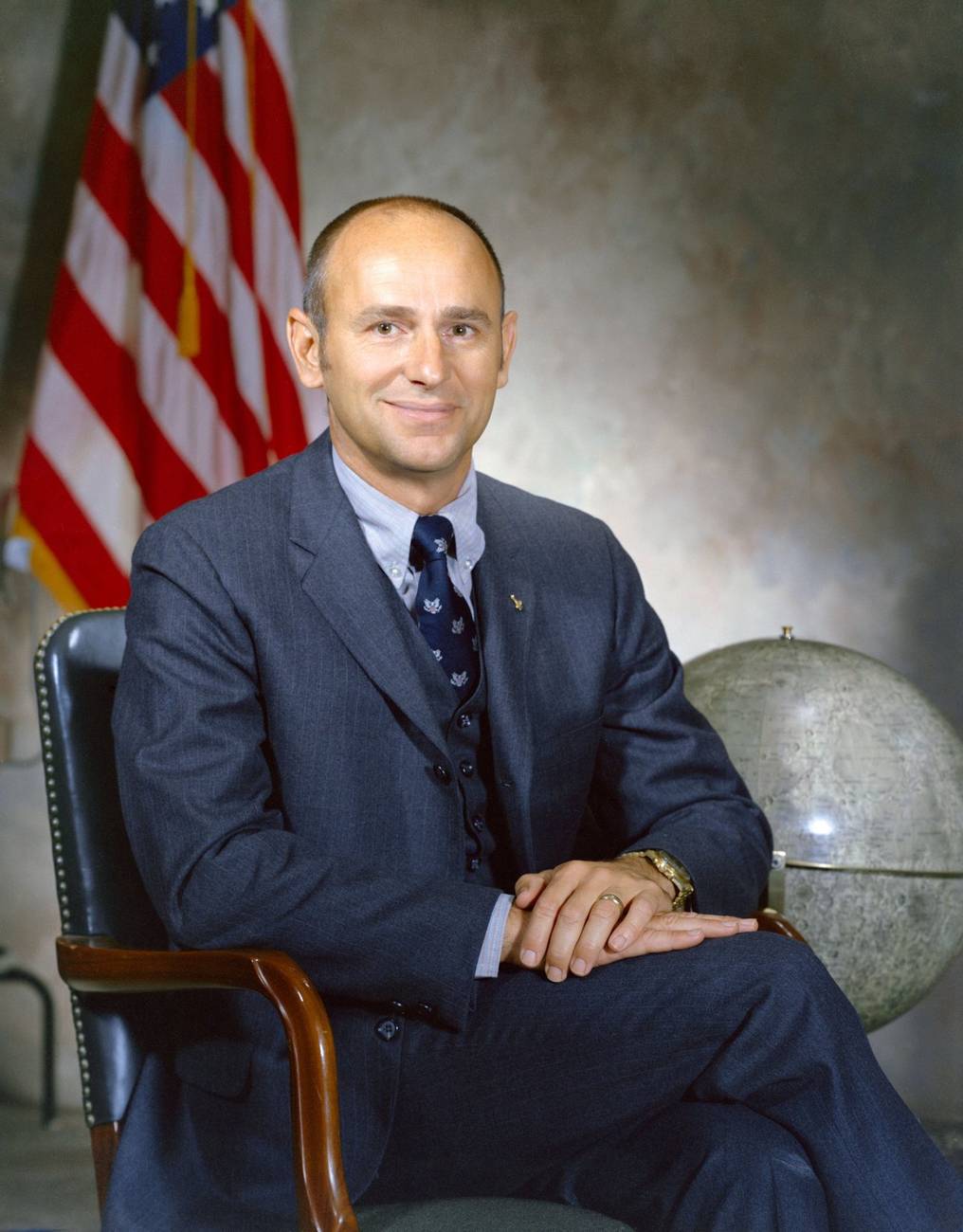
Many people were reluctant to talk about their time at NASA, like the former Astronaut turned painter Alan Bean, who was a friend of Chaikin, “He was so busy with his painting, and he wanted to give all his time to that,” the author said. Some people were instantly ready to talk, and others took years to open up. The most well known Astronaut of the entire group and the first man on the Moon, Neil Armstrong, was possibly the most reluctant. Before contacting him, Chaikin had one of the other astronauts talk to Armstrong beforehand. After reaching out for the first time, Chaikin did not hear back directly from Armstrong himself but his secretary. They requested to see the sample chapter before talking, “he was reluctant to speak to a person that was writing a commercial book; he was weary of being exploited, which is understandable being in his position.” Chaikin said. The sample chapter was sent, but after a considerable amount of time, there was no response. “I finally, shaking with nervousness, called him, and he answered the phone,” Chaikin remembered. He then asked Armstrong if he had time to read the chapter, and Neil Armstrong responded, “Not as much as I would like, but enough to be very favorably impressed.”
In our talk, he also mentioned that the main reasons for the project taking eight years were convincing all the astronauts to talk to him but also changing/improving his writing process, “I had to rise to a level of storytelling that would live up to the amazing material that I was writing about…it was a really rugged road,” he mentioned. Throughout the last year of the development of his book, Chaikin was helped by a freelance editor who helped with the development of Chaikin’s writing, “I had been doing things like repeating myself…she pointed it out, and it was great, it was like going to book writing school boot camp.” Chaikin said. “It made the book much better, and I came into my own.” An example of this help that he received is his in depth writing about the preparations for Apollo 11, he has a specific section on Neil Armstrong. He writes about Armstrong’s hobby of flying engineless planes called gliders. Before that glider piece in the book, Chaikin originally had a specific passage about Neil that his editor labeled as, “very run of a mill TIME magazine boilerplate copy.” Chaikin “swallowed hard” and put to work his extensive creative and research-able mind. He remembered a TIME magazine article that showed Armstrong and his glider. “You can just kind of click into a wavelength where you just start to hear this music and feel this flow of language, and those are beautiful moments when you can get them,” Chaikin said regarding the development of his writing.
A Man On The Moon ended up being very well received when it was released and still is held in the highest regard of works that document space exploration and, more specifically, the Apollo missions. The book and the accounts of the stories were so well liked and appreciated that even astronauts directly involved with many of those missions like Apollo 17 member Gene Cernan, said, “I’ve been there, Chaikin took me back.” Even with the tremendous initial reception, A Man On The Moon: The Voyages of the Apollo Astronauts was not on the New York Times best seller list because Deke Slayton’s (NASA’s first Chief of the Astronaut Office) and Alan Sheperd’s (former Astronaut who went to the Moon) book made with Jay Barbree, Moon Shot, came out around the same time.
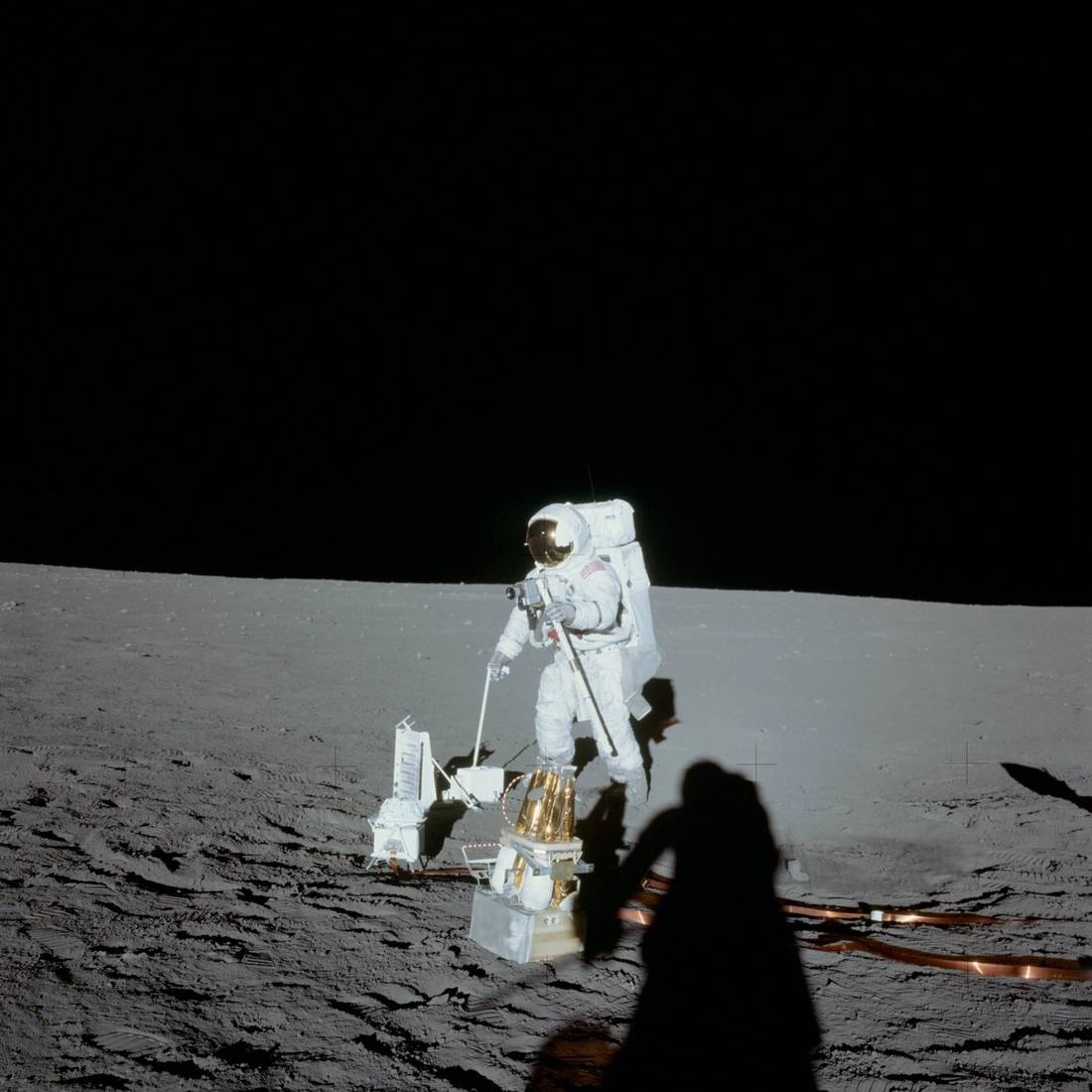
Both books came out around the same time, and both were also involved in film projects. Chaikin’s A Man On The Moon was the basis for HBO’s mini series From the Earth to the Moon. The Project was produced by Brian Grazer and the Apollo 13 blockbuster movie director Ron Howard. The mini series was released over 26 years ago but Chaikin remembers the very beginning of it, when asked if he recalled being approached for the idea he instantly responded, “I remember it very vividly.” A friend of Chaikin’s got the author an invite to see the set of Ron Howard’s Apollo 13 film. There, he met the person who would leave a message on Chaikin’s answering machine later the next year saying, “Andy Chaikin, this is Tom Hanks. I don’t know how I got your number, but I did; it’s 4 o’clock in Los Angeles…I want to talk to you about something.”
The A Man On The Moon author had nothing but good things to say about Hank’s and HBO’s mini series, “the spirit of that production was just beautiful, it was like they were capturing the spirit of Apollo, they just knew they were doing something better and wanted to do the best job they could.” Chaikin also mentioned how fortunate he was that HBO, but more specifically, Tom Hanks, was the producer, “I was incredibly lucky it was Tom Hanks because he had absolutely the right approach; he always felt that the true story is the best story.”
“[He] always felt that the true story is the best story.”Andrew Chaikin, on Tom Hanks
Andrew Chaikin went on to write other books about Mars, Apollo, and Space in general. Chaikin loves to write music and play the guitar, bass, and keyboard but no longer does the stand up comedy that he did in his earlier days. Chaikin is not done with writing and his research, but the work that he has done throughout his career, like A Man On The Moon, will arguably be looked back on as some of the definitive historical stories regarding space exploration and the Apollo missions.